- Stories
- Fanfiction
- The Academy Teacher
- What We Teach
What We Teach
He rose before the sun slipped over the rooftops. The kettle had already begun its low whine, a familiar reminder that mornings in Konoha were measured in the rise of steam, not in the clamor of the world outside. Iruka slipped his sandals on, the worn leather sighing under his feet. The hallway was narrow, the paper lanterns flickering as if they too were waiting for the day to begin.
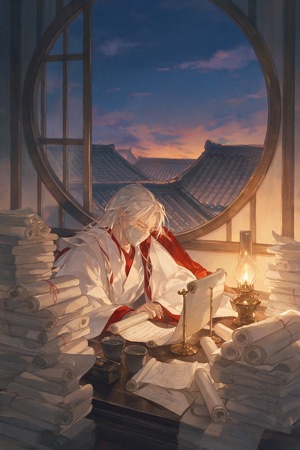
The first thing he did was open the wooden chest at the end of the room. Inside lay the curriculum files—thick, cream-colored ledgers that had survived the war by sheer stubbornness. He lifted the top volume, the pages still smelling faintly of ink and dust. A thin, red ribbon marked the section on "Foundations of Ninja Ethics." He traced the ribbon with a fingertip, feeling the faint ridges of the paper. The old text was a relic of a time when peace had been an assumption, not a hope.
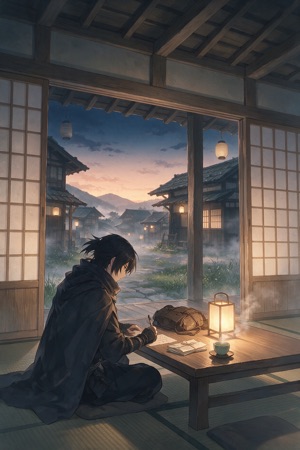
He sat at the low table, the tea already cooling in its porcelain cup. The morning light filtered through the shoji, casting thin bars across his notebook. He opened to a fresh page, the blankness a quiet invitation. He thought of the children he would meet that day—bright eyes that had never seen a battlefield, hands that had never held a weapon. They would ask questions that were simple and profound, and he would answer with the care of a gardener tending seedlings.
He began to write. The first line was an echo of the old lesson, but the words were different. He let the pen glide slowly, each stroke a small act of repair.
"Today we learn what it means to be a ninja," he wrote. "Not for glory, not for war, but for the quiet promise we keep to each other."
He paused. The phrase felt too light for the weight it carried. He added a clause, a line that would sit beside the rest like a hidden stone in a garden path.
"We are the bridge between what was and what could be. We stand between the shadows of the past and the light of tomorrow."
He set the pen down, the ink still wet. The words were simple, but they held the ache of the village's recent losses. He imagined the children listening, the first syllable of "bridge" landing like a soft footfall on a stone bridge they would cross later in life.
He flipped to the next page, where the lesson plan usually listed "History of the Great Ninja Wars." He crossed it out with a decisive slash, then wrote in its place: "Stories of the village. Stories of the people who kept the walls standing."
He wrote a note in the margin: "Include the story of the girl who kept the lanterns lit during the night the moon fell." He smiled faintly. It was a small joke, a reminder that even in darkness people found ways to stay bright. He imagined the children's faces lighting up at the image of a lantern glowing against a black sky. The humor was gentle, a quiet chuckle that would not disturb the seriousness of the lesson but would soften its edges.
He turned the page and began the opening speech he would deliver. He read it aloud to the empty room, his voice low, his breath moving the steam from the tea.
"Good morning, everyone."
He let the pause linger. "We have lived through a storm that many of you have never seen. You may ask why we speak of storms when the sky is clear. Because the wind still carries the scent of ash, and the earth remembers the tremor of footsteps that never returned."
He felt the words settle. The children would hear the phrase "never returned" and wonder who had been lost. He would not name names; the loss was a collective memory, a scar that ran through the village's foundations.
"The ninja way is not a weapon," he continued. "It is a promise to protect, to listen, to understand. It is a promise we make not just with our fists, but with the quiet moments we share."
He glanced at the ledger beside him, the old lesson on "The Way of the Shinobi," a list of virtues that had once been taught with the expectation of battle. He tapped the page gently, as if to acknowledge the past without letting it dominate the present.
He added a line about the importance of paperwork. "You will learn to fill out a field report," he wrote, "and you will learn to file a report on how you felt after a day of training. Both are equally important."
He chuckled quietly at the thought of the children learning to describe their feelings in official form. It was an administrative detail, but it was also a way to give voice to the invisible wounds. He imagined one of them, a boy with a missing tooth, saying, "I felt the weight of the day like a stone in my pocket." The clerk in the village hall would file that away, and perhaps one day someone would read it and understand.
He wrote the closing of the speech. "Remember, the strongest walls are not built of stone, but of the trust we place in each other. When we stand together, we become a shield. When we listen, we become a map. And when we laugh, even in small ways, we become the light that guides us home."
He set the pen down and read the speech again, each sentence landing like a gentle tap. The words were plain, but the undercurrent was a river of grief he had learned to control. He imagined the children hearing it, the way they would absorb the lesson like a sponge, the way they would ask for clarification on "trust," "shield," "map," and "light."
He thought of his own first lesson, the day he had stood before a class of wide-eyed youngsters and tried to explain why the leaf symbol mattered. He had spoken of hope and duty, and the children had listened with the reverence of those who understood the price of peace. He had felt the weight of the village on his shoulders then, and he felt it again now, but it was different. It was not a burden; it was a responsibility, measured in the quiet moments between breaths.
He rose, the tea cup now empty, the steam long gone. He placed the revised curriculum on the desk, the red ribbon now curled around the new opening speech. He smoothed the paper, careful not to crease the words he had crafted. He imagined the chalk dust rising as he would write the lesson on the board, the faint scent of pine from the nearby forest seeping through the open windows, a reminder that the world outside the village walls was still alive.
He walked to the small balcony, the morning air crisp, the lanterns on the eaves swaying gently. Below, the village was waking. Vendors began setting up stalls, the scent of fresh fish and grilled meat drifting from the market. Children ran in the streets, their laughter a thin thread weaving through the larger tapestry of daily life. The war had left its scars, but the village continued to breathe, to grow, to teach.
He thought of the old teacher who had once told him, "A ninja's greatest weapon is his heart." He wondered if the children would ever understand that a heart could be both a shield and a target. He hoped his words would give them a map to navigate that paradox.
He turned back inside, the kettle now cold, the tea leaves settled at the bottom of the cup. He washed the cup, the water running clear, the sound a soft patter against the stone basin. He placed the clean cup on the shelf, next to a small wooden figurine of a leaf, a reminder of the village's symbol and the promise it represented.
He opened the door to his classroom, the wooden floorboards creaking in greeting. The desks were arranged in neat rows, each one bearing a name tag. He placed the revised lesson on the front desk, the paper slightly damp from the morning humidity. He stepped back, his silhouette framed by the doorway, the light catching the edge of his coat.
The bell rang, a simple metal clang that echoed through the hall. The children poured in, their shoes thudding softly on the floor. Their eyes were bright, their shoulders light. They settled, the murmur of their voices a low tide that rose and fell with the rhythm of the day.
He stood at the blackboard, the chalk in his hand, the speech ready in his mind. He drew a single line, a simple slash that cut the empty space, then began.
"Good morning, everyone."
The children turned, their faces turning toward him like seedlings seeking sunlight. He felt the weight of the past settle into his chest, not as a shadow but as a steady pulse. He spoke each word with care, letting the silence between sentences fill with meaning.
"We have lived through a storm that many of you have never seen."
He watched a girl with a braid pause, her brow furrowing as if she could feel the distant rumble of thunder. He continued, his voice steady.
"The ninja way is not a weapon. It is a promise to protect, to listen, to understand."
A boy raised his hand, his eyes bright. "Sensei, does that mean we don't learn how to fight?"
Iruka smiled, a small, private smile that tugged at the corners of his mouth. "We still learn to defend," he said. "But we also learn to defend our hearts, our homes, each other."
He saw the children exchange glances, the unspoken question passing between them. He added, "You will learn to fill out a field report, and you will learn to file a report on how you felt after a day of training. Both are equally important."
A ripple of laughter passed through the room, soft and surprised. The humor was understated, a gentle breeze that lifted the heaviness of the moment. He let the laughter settle, then moved to the final words.
"Remember, the strongest walls are not built of stone, but of the trust we place in each other."
He looked at the chalk dust settling on his fingertips, the faint smell of ink and earth mingling in the air. He felt the lesson sink into the children, a quiet seed taking root.
When the bell rang again, signaling the end of the first lesson, the children shuffled out, their chatter filling the hallway. Iruka watched them go, the echo of their footsteps a reminder that each day added a layer to the village's story.
He stayed behind, the classroom empty, the blackboard still bearing the words he had written. He erased them, the chalk dust swirling like a soft snow. He thought of the scar on his own forehead, a reminder of the night he had watched a friend fall. He thought of the promise he had made to wield his words carefully, to not cut too deep. He thought of the tea he would make tomorrow, the steam curling like a gentle reminder that each day was a chance to teach, to listen, to stand watch.
He gathered the revised curriculum, the red ribbon now tied around the new opening speech. He tucked it into his coat, feeling the paper's weight against his chest. He stepped out of the classroom, the hallway lights humming softly. The village outside was alive with the ordinary rhythm of peace—vendors calling, children playing, lanterns flickering. He walked into that world, his steps measured, his heart steady.
He reached the village hall, the place where the council kept records, where the war's paperwork had been stored like relics. He placed the curriculum on the clerk's desk, the red ribbon catching the light. The clerk, a middle-aged man with ink stains on his fingers, looked up, a smile forming.
"New lesson?" he asked.
Iruka nodded. "A new beginning."
The clerk flipped through the pages, his eyes scanning the words. He paused at the line about the lanterns, his smile widening. "A little humor," he said, tapping the paper. "I like that."
Iruka returned the smile, a quiet acknowledgement that even in the smallest details, there could be hope. He turned to leave, the hallway behind him echoing with the soft thud of his sandals. He passed the kitchen where a pot of stew simmered, the aroma of carrots and daikon winding its way through the corridors. He thought of the children’s faces, their curiosity, their questions, their unspoken grief.
He stepped back onto the street, the lanterns swaying gently above him. The wind brushed his cheek, cool and steady. He looked up at the sky, the early sun painting the clouds in soft pinks and golds. He breathed in the scent of pine and earth, the same scent that had greeted him every morning for years. He felt the weight of the past settle into the present, not as a burden but as a foundation.
He walked home, the kettle already waiting for him, the tea leaves ready to be steeped. He imagined the next day's lesson, the next field exercise, the next small ripple in the fabric of the village. He carried the weight of the past, but it no longer sat as a shadow over his steps. It rested, quiet and measured, alongside the present. He opened his door, the familiar creak welcoming him home. Inside, the kettle boiled again, the scent of tea rising, the same as before. He poured a cup, the steam curling like a gentle reminder that each day was a chance to teach, to listen, to stand watch. He took a sip, the warmth spreading through his chest, and let the day’s small terror settle into a quiet lesson that would linger, soft as a pine needle in the wind.

The app remembers where you stopped, reads chapters aloud, and works offline. Writing lives there too.