September
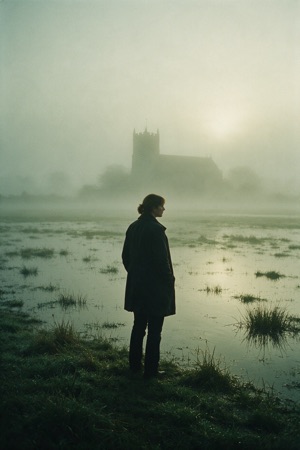
The autumn wind had the habit of sweeping over the lake and dragging a thin, gray drizzle into the castle walls, as if the heavens themselves were trying to iron out the last remnants of summer. Bridie Ansell stood on the stone step of the laundry, hands tucked into the pockets of her house-elf-tucked jumper, watching the new teachers stride past the portrait of the Fat Lady with the sort of confidence that suggested they thought the castle belonged to them now. Alecto Carrow’s black hair was a knot of rope, her eyes glinting like a pair of polished knives; Amycus Carrow followed with a smirk that would have made a portrait of a particularly mischievous Niffler blush.
She had been appointed prefect only a week before the Carrows arrived, an appointment she had accepted with the same resigned practicality that governed most of her life. “Prefect, you’ll be expected to keep the kitchens in order,” Professor McGonagall had said, her voice a low warning. “And to ensure that the students are fed.”
Bridie had taken that as a command, not a courtesy. The kitchens were a maze of copper pots, flickering firelight, and the ceaseless clatter of plates—a place where the war outside the walls could be ignored, if only for a moment. The new regime, however, had made it clear that there would be no ignoring. The Carrows demanded that every student be accounted for, that no one lingered beyond the allotted time, and that the food be distributed in a manner that reinforced their version of order.
She set about her first act of resistance with the same methodical efficiency she used when sorting the laundry. The old wooden ledger that had once recorded the weekly allocations of linens now lay open on the counter, its pages yellowed but still legible. Bridie traced the lines with a fingertip, noting the names of the younger Hufflepuffs who, unlike their Gryffindor or Ravenclaw counterparts, had no choice but to spend most of their evenings scrubbing pots or folding towels. She could see, in the cramped margins, the subtle ways the Carrows would try to bend the system: extra hours for the “more diligent” students, a reduction in rations for those deemed “troublesome.”
When the Carrows announced the new schedule, it was a litany of punitive measures. “From this day forward, all students will be required to attend a mandatory dinner service in the Great Hall,” Alecto had declared, voice flat as the stone arches. “The kitchen staff will be supervised at all times.” It was a thinly veiled threat, a way of ensuring that any deviation from the norm could be spotted and reported.
Bridie did not smile at the proclamation. Instead, she slipped a quill into her ink bottle and began to draft a rota that would appear to comply while subtly undermining the Carrows’ control. She placed the senior Hufflepuffs, those who could move swiftly and speak quietly, into the early shifts. She assigned the younger ones to the later ones, ensuring they would not be seen by the Carrows when they made their rounds. She noted the moments when the pantry doors were left ajar, the brief intervals when the House-elves’ chatter was loud enough to mask whispered instructions. In the margins she wrote, in a careful hand that no one else would read, the names of students who needed extra portions of the stew—a small gesture, but one that could mean the difference between a fever and a full recovery.
The rota was more than a schedule; it was a map of small rebellions. Bridie knew that the Carrows would inspect the ledger at the first opportunity, so she used a simple cipher—alternating the first letters of each name with the next in the alphabet. To the untrained eye, the list looked like a typical duty roster; to those who knew the code, it was a lifeline.
When she presented the completed page to the kitchen steward, a stout man named Gifford with a perpetual smudge of flour on his cheek, he gave her a thin, surprised smile. “You’ve done a fine job, Miss Ansell,” he said, his voice a rumble of gratitude. “I’ll see to it that the Carrows don’t notice anything amiss.”
She returned the ledger to the cupboard, her fingers lingering on the leather strap as if it might slip from her grasp. The rain outside had thickened, turning the courtyard into a slick of mud that seemed to swallow the footfalls of anyone who dared venture beyond the castle walls. Inside, the kitchens were a warm, humming cocoon of activity. The smell of roast chicken and boiled potatoes rose in steady plumes, mingling with the faint, acrid tang of burned butter that reminded her of the first time she had tried to make a proper Yorkshire pudding.
Later that evening, as the students lined up for the mandatory dinner, Bridie slipped a spare portion of stew onto the tray of a seventh-year who had been coughing all week. The boy glanced at her, eyes wide with a mixture of gratitude and fear, and then tucked the extra serving beneath his robes. It was a small act, but it carried the weight of a promise: that someone was watching, that someone cared enough to risk a spoonful of defiance for the sake of a friend.
Alecto Carrow prowled the hallway outside the Great Hall, her eyes scanning the crowd for any sign of disobedience. She noted the orderly rows, the way the students bowed their heads as they entered, and she seemed satisfied. “Good,” she muttered, more to herself than to anyone else. “Everything is as it should be.”
Bridie watched her from the kitchen doorway, a faint smile tugging at the corners of her mouth. The Carrows believed they had imposed order; she had simply redirected it. The rota, a sheet of paper and a few inked letters, would go unnoticed by those who only saw the surface. Yet it would mean that the sick would eat, that the shy would not be forced into the front line of the Carrows’ scrutiny, and that the kitchen, the heart of the castle’s sustenance, would beat a little slower, a little more quietly, under the watchful eyes of a prefect who knew that the smallest of changes could ripple outward.
When the night deepened and the last of the candles in the kitchen guttered out, Bridie lingered by the sink, rinsing the final pots with a steady rhythm. The water was cold, but the heat from the stove lingered on the tiles, and she felt the quiet satisfaction of a job done well. The Carrows would not notice the missing portions, the slight shift in the schedule, the way a few extra ladles of broth found their way to the infirmary ward. They would not hear the whispered thanks from a boy whose fever had broken, nor the soft sigh of relief from an elf who had been given a moment’s respite.
She turned off the tap, dried her hands on a towel, and slipped the ledger back into its cupboard, the code hidden in plain sight. The castle creaked around her, a living thing adjusting to a new, harsher rhythm. Bridie pulled her jumper tighter around her shoulders and stepped into the hallway, the rain pattering against the stone. The war outside might have marched its way into Hogwarts, but within these walls, she would keep the laundry turning, the kitchens feeding, and the quiet, unassuming resistance humming beneath the surface. In the end, that was all the prefectorial duty required—competence wrapped in a dry smile, and a willingness to do the work no one else would notice.

The app remembers where you stopped, reads chapters aloud, and works offline. Writing lives there too.