To Sakura
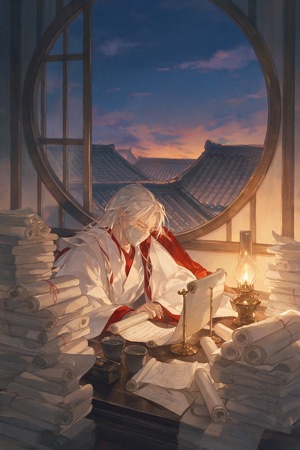
He pulled the thin paper from the drawer and spread it on the low table, the wood still warm from the tea kettle he had boiled earlier. The ink had barely dried from the night before. He pressed his thumb against the edge, feeling the faint stickiness. He stared at the blank top, the same emptiness that had greeted his thoughts for months.
Sakura— he wrote, the syllable catching on his tongue. He lifted the pen, smoothed the line, then tapped it against the wood. He crossed it out with a hurried slash, the ink darkening the page more than his words. He tried again. “Sakura,” he wrote, the name neat and exact. He erased it, the paper trembling under his fingertips. He frowned, the small crease forming at the corner of his eye. He thought of the mornings in Konoha, the way she would press a bun into his palm before leaving for the academy. He tried to capture that in a sentence, but the memory slipped like water through his fingers.
He set the pen down, and the room filled with the soft creak of the shoji sliding as a breeze slipped through. He listened to the distant clatter of market stalls, the low hum of the village settling into night. He could hear the faint clang of a blacksmith’s hammer, a rhythm that reminded him of training. He let that sound settle in his chest, a metronome for his thoughts.
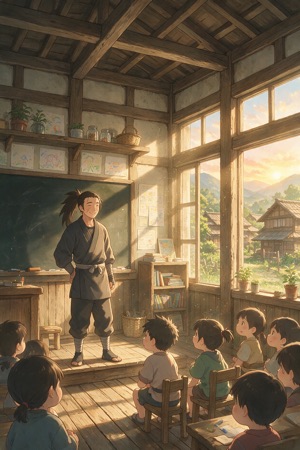
The next line came slower. “I heard you’re teaching the younger ones now.” He paused, the words feeling too light, almost a joke. He forced a smile, the kind he used when he watched Naruto attempt to cook ramen and set the kitchen on fire. “You always did make a mess of things and still managed to keep them together.” He crossed the sentence out, the ink blotting the paper like a small stain of regret.
He shifted his weight, the tatami giving a soft sigh. He thought of the day he had seen her kneel beside a wounded comrade, the way her eyes hardened then softened. He wanted to say that he remembered that, that he still saw the same resolve in her. He tried: “I remember the way you held your hand steady when we lost…” He stopped, the sentence breaking in his throat. He tore the page slightly where the ink bled, a tiny tear that mirrored the fissure in his own heart.
He opened a new sheet, the fresh grain a reminder that he was still trying. He wrote a list of things he had done since he left the village: a field report on the new trade routes, a ledger of supplies for the refugees he’d helped escort, the names of three children he had taught to read. He listed them plainly, as if the numbers could fill the space between him and her. The paper filled with mundane facts, each line a brick in a wall he could not climb.
He stared at the list, at the starkness of it. He thought of the night he had watched her from the rooftops of Konoha, the way the moon painted her hair silver. He wanted to tell her that the sight had haunted him, that it was the first thing he missed when the wind turned cold. He wrote, “I still see you under the moonlight, Sakura.” He erased it, the ink spreading like a small river across the paper. He chuckled softly at the absurdity of trying to capture a memory in ink.
The room grew quieter, the fire in the hearth dwindling to embers. He could hear the occasional hoot of an owl, the rustle of leaves against the stone wall. He felt the weight of the unsent letter pressing against his chest, a reminder that he could not speak the words aloud. He knew the letter would never reach her, that the paper would remain tucked in his satchel, a secret he carried like a spare set of kunai.
He lifted his pen once more, his hand trembling slightly. He wrote a single line, the shortest he could manage: “I am sorry.” He held the paper up to the dim light, the letters stark against the page. He knew it was insufficient. He knew it could not bridge the years, the distance, the silence that had settled between them like dust. He tried to add a second line, something to soften the blow, but the words felt clumsy. He scribbled a smiley face, then scratched it out, the childlike attempt feeling out of place.
He set the pen down, the weight of the ink now a physical thing on his palm. He folded the paper carefully, the crease crisp, the edges neat. He placed it in a small envelope he kept for letters never sent, the one he had stitched together from old shuriken wrappers. He imagined the envelope sitting on a desk in the village, waiting for a hand that would never take it.
The night deepened, and the wind outside grew sharper. He heard the distant bark of a dog, the soft sigh of the river beyond the hills. He closed his eyes, feeling the cold seep into the room, the same cold that had settled in his heart when he left. He thought of Sakura’s laugh, the way it could lighten a room even when the world was falling apart. He felt a pang, then a quiet acceptance. He could not fix what had been broken, could not send what he could not say.
He rose from the table, the paper still in his hand. He slipped the envelope into his pack, the weight of it a reminder of a promise he could not keep. He walked to the door, the wooden floor creaking beneath his steps. He opened it, the night air rushing in, smelling of pine and distant sea. He paused, looking back at the room he would leave behind, the simple furnishings that had become his refuge. He let the door close softly behind him, the latch clicking like a final punctuation.
He walked down the narrow path, the lanterns of the village flickering like fireflies in the distance. He thought of the next letter he would write, the one that would never reach its brother. He thought of the future he could not predict, the past he could not change. He kept the envelope close, a secret he would carry until the end of his wandering. The grief lingered, quiet as a pine scent in the night, and he let it settle, knowing that some words were meant only for the silence that heard them.

The app remembers where you stopped, reads chapters aloud, and works offline. Writing lives there too.